
Sayville, NY 11782
Masonry in Sayville
Retaining walls, garden walls, piers and stone veneer built to last Serving Sayville and the surrounding Suffolk County towns, with free on-site estimates.
Masonry in Sayville
Masonry for Sayville homes
Looking for masonry in Sayville? Islip Paving & Masonry works across Sayville and the neighboring Suffolk County towns, building to a high standard on solid foundations at clear, competitive prices.
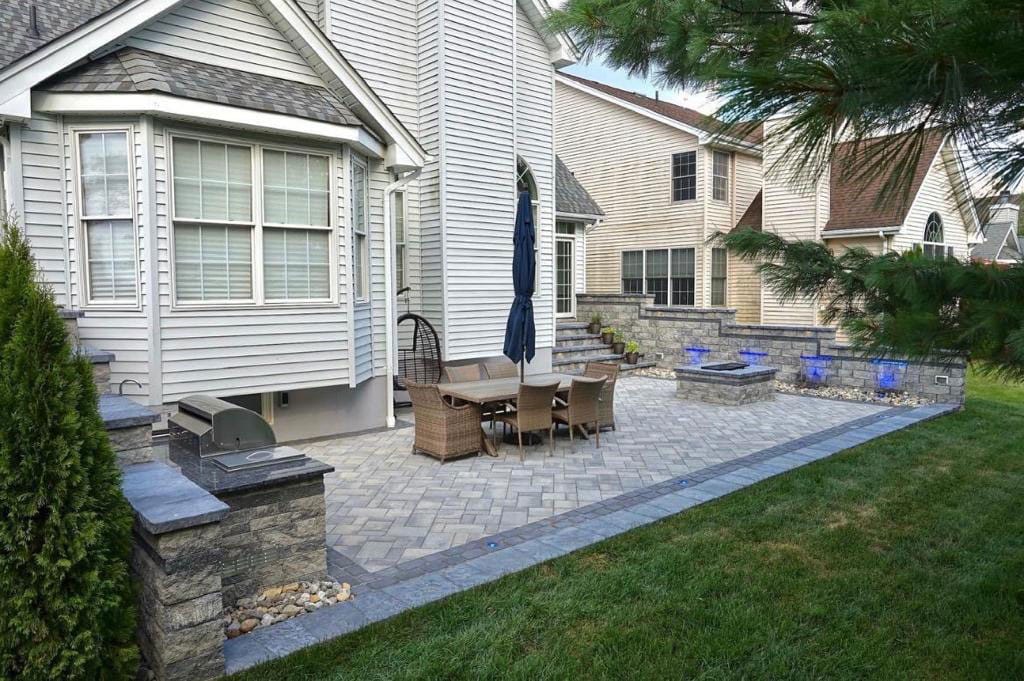
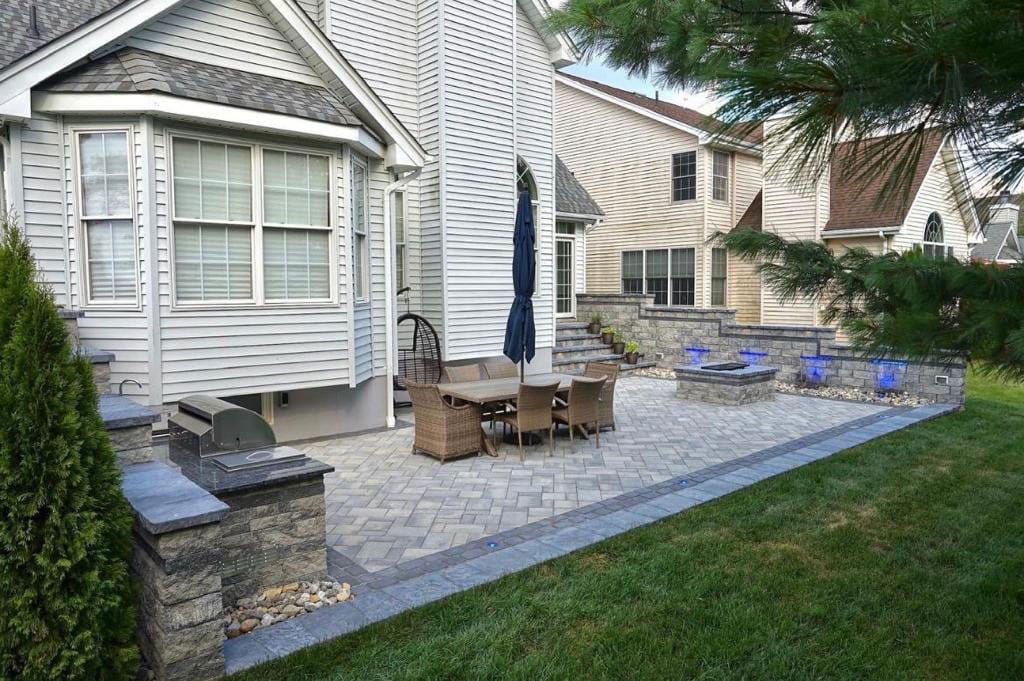
Good masonry is the part of a property that people notice and that has to stand for decades. Our masonry work covers retaining walls, garden and boundary walls, seat walls, piers, columns and entrance features, plus brick and natural stone veneer, including stone faced outdoor kitchens and grill surrounds. Every wall sits on a footing sized for its height and load, with drainage behind retaining walls and consistent jointing so lines stay true. We also repoint and rebuild damaged brick or stone, matching existing materials as closely as available, so repairs blend in and older walls keep doing their job.
Why Sayville chooses us
- Footings sized for the job, so walls stay level and true through freeze-thaw winters.
- Drainage planned from the start, so retaining walls are not pushed over by water pressure.
- Materials matched with care, so new brick or stone blends with what is already there.
- Consistent jointing throughout, so the finished work sheds water and looks right for decades.
Downtown and the shore
Masonry in Sayville for Walkable Streets Near the Bay
Sayville, in the Town of Islip, has a walkable downtown along Main Street, ferries to Fire Island and homes ranging from older houses near the bay and downtown to postwar streets further inland. Masonry on those older, walkable blocks is seen up close by everyone who passes. A front garden wall or a pair of piers becomes part of the streetscape, so detail and proportion matter. We take that seriously.
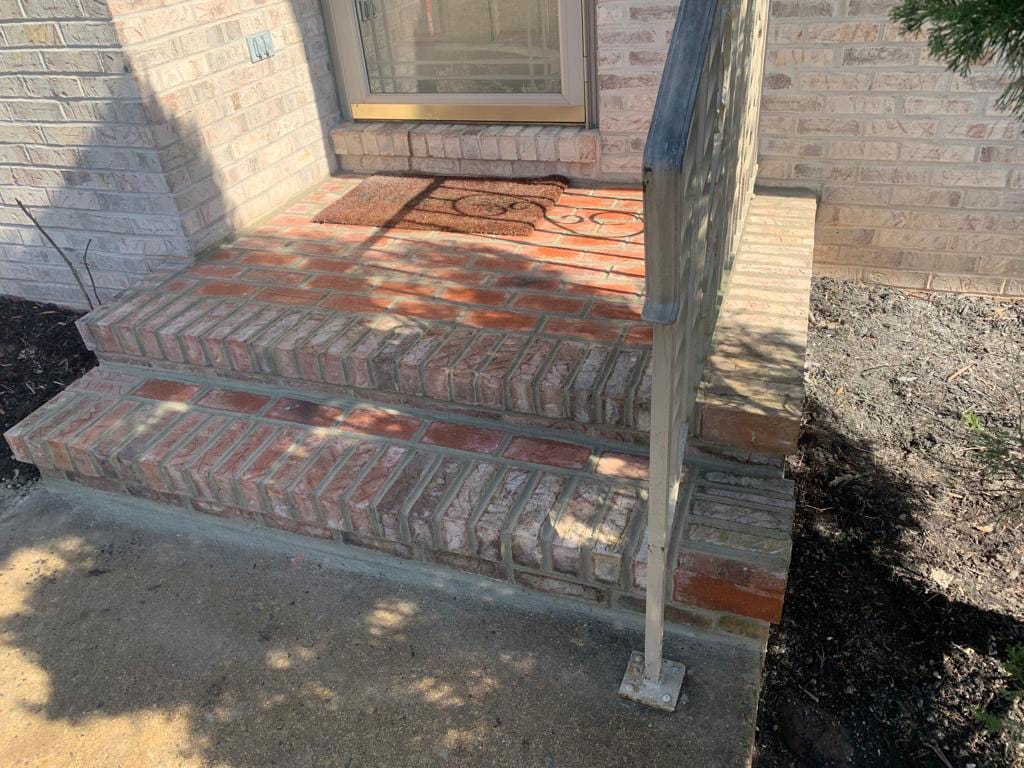
On older homes we look at what the street already has before suggesting anything. Brick color, the size of the units, how joints were struck and whether caps are stone or brick all set a pattern. New masonry that follows that pattern looks settled from the day it is finished. Where repairs are needed, we match brick as closely as available and choose a mortar suited to older, softer units.
Closer to the shore the water table is high, which shapes what happens below ground. Footings go on a free draining stone base, and any retaining wall gets a drainage zone with an outlet so water does not build behind it. These steps are invisible once the wall is finished, but they decide how it handles the wet months. On lower lots we also check how the street drains, since water from the road can end up against a front wall.
Postwar homes further from the bay are simpler. Garden walls, seat walls and boundary walls on flat, sandy lots are straightforward masonry construction. Whichever part of Sayville you live in, if you searched masonry near me and found us, we will look at the house and the ground before offering a plan. Seat walls around a back patio and a stone grill surround are popular on those larger postwar yards, and the flat ground keeps them simple to found.
Also covering near Sayville
- Bayport
- West Sayville
- Oakdale
- Patchogue
Following the street's pattern
New walls take their cue from nearby brick, joints and caps.
Front walls seen up close
On walkable blocks we pay attention to finish quality at eye level.
Shoreline footings kept dry
Free draining bases suit the high water table near the bay.
Repairs that disappear
Matched units and mortar so mended sections blend with the original.
Gate hinges set into brick
Older Sayville frontages often pair brick piers with metal gates; hinge pins are set into the masonry with care so the pier stays sound as the gate swings.
A masonry contractor working in Sayville should respect both the downtown character and the wet ground near the bay. We bring that balance to every job across the Town of Islip. Call (631) 710-5374 to book a visit, and we will follow it with a written estimate at no charge. Photos of nearby walls you like are always helpful.
Call (631) 710-5374What's involved
Masonry in Sayville: What We Do
Every masonry job in Sayville is priced after we've seen the site. A typical project covers the following.
- Retaining walls with drainage
- Garden, boundary and seat walls
- Piers, columns and entrance features
- Brick and natural stone veneer
- Outdoor kitchen and grill surrounds
- Repointing and rebuilding damaged masonry
Recent work
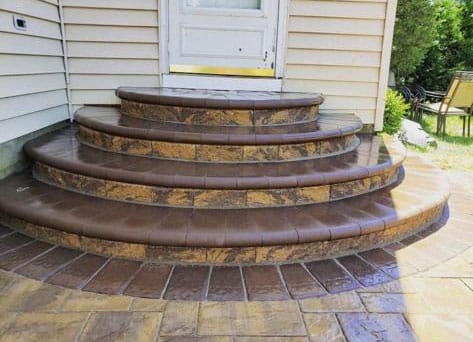
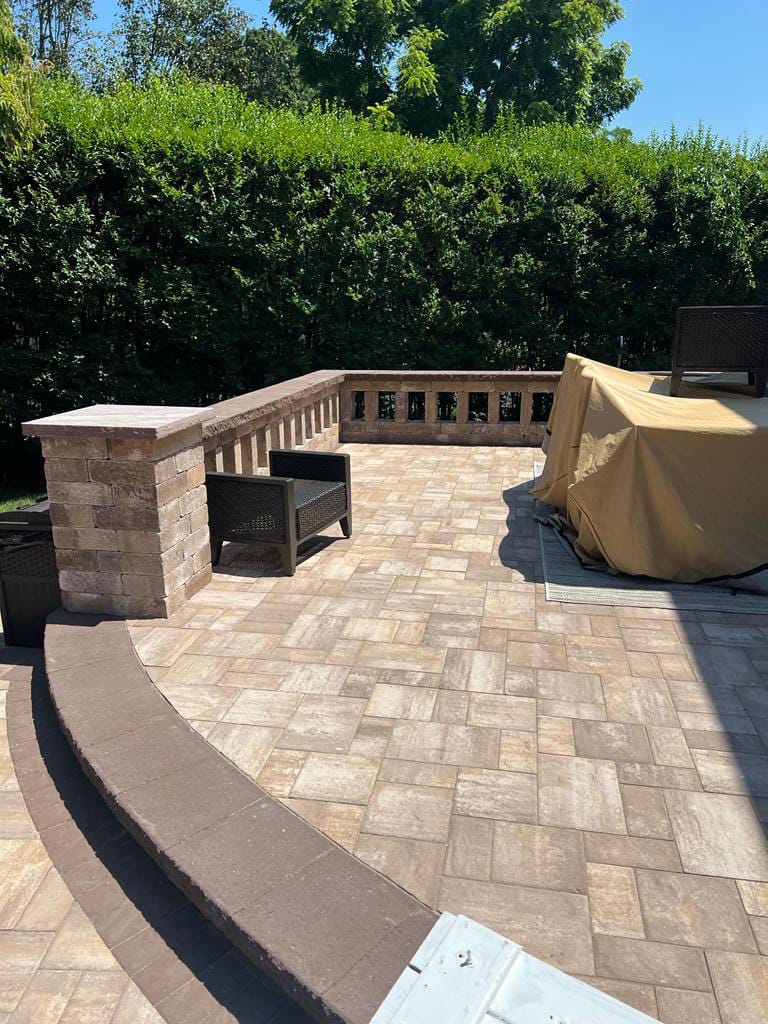
Masonry we've built nearby
A selection of real masonry jobs from around Sayville and Suffolk County.
Why homeowners call us back
Built Right, Priced Honestly, Backed Up
We keep it simple: build it on a proper base, price it honestly, and stand behind the work.
Built to Last
Every driveway, patio, and wall goes on a base built for Long Island weather, not just a good-looking top layer.
Clear Pricing
A written estimate before we start, so you know the price and the plan with no surprises on the day.
Local to Sayville
We work across Sayville and Suffolk County and rely on word of mouth, so every job has to be one we can put our name to.
Good to know
Masonry in Sayville: Your Questions
Do retaining walls need drainage behind them?
Can you match my existing brick or stone?
How tall can you build a retaining wall?
How long should masonry work last?
Do you repair and repoint existing walls as well as building new ones?
Ready for a Free Estimate?
Call or message and we'll arrange a time to come and price the job. No pressure, no obligation.
Other services in Sayville
Masonry in other areas
- Islip
- Medford
- Hauppauge
- Port Jefferson
- Smithtown
- Commack
- Huntington
- Northport
- Riverhead
- Hampton Bays
- Mastic Beach
- Manorville
- Brentwood
- Central Islip
- Deer Park
- Bay Shore
- Lindenhurst
- Shirley
- Holbrook
- North Babylon
- East Northport
- Ronkonkoma
- Selden
- Mastic
- Melville
- Coram
- Stony Brook
- Rocky Point
- Patchogue
- Babylon
- Amityville
- Great River